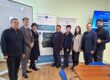
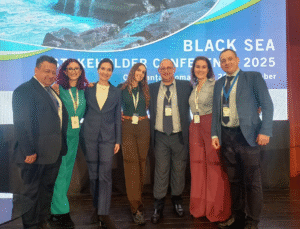
Scientists of the State Organization “Institute of Market and Economic & Ecological Research of the National Academy of Sciences of Ukraine” took part in the annual Stakeholder Conference of the Common Maritime Agenda for the Black Sea, held in Constanța, Romania, on October 28–29, 2025.
This year, the conference summarized the joint achievements of the Black Sea basin countries under the chairmanship of Ukraine in 2025.
The head of the delegation from Ukraine was Mr. Serhii Taran, representative of the Ministry of Education and Science of Ukraine, Head of the Monitoring and Communications Department of the Directorate for Science Development.
The Common Maritime Agenda (CMA) for the Black Sea is an initiative of the European Commission aimed at strengthening regional cooperation to achieve a sustainable blue economy in the Black Sea. The CMA recognizes the need for a coordinated approach to addressing common maritime challenges and blue economy issues.
It is a partnership among seven Black Sea countries, including Bulgaria, Georgia, Moldova, Romania, Turkey, and Ukraine.
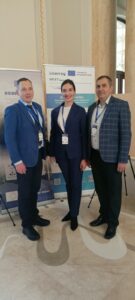
On the first day of the Forum, the scientists of the Institute presented the developments under the projects SturNet – “Network for the Preservation of Sturgeon and for the Sustainability of the Black Sea Basin Ecosystem” (BSB00172, MDLPA 176757/27.08.2024), implemented within the Interreg VI-B NEXT Black Sea Basin 2021–2027 Programme, and – RESPONSE Building Response Frameworks under existing and new Marine Pollution Challenges in the Black Sea #101124661 EMFAF-2023-PIA-FLAGSHIP-2-BLACK, in which the SO IMEER NAS of Ukraine acts as a project partner.
During the discussion and on the sidelines of the Conference, the Institute’s scientists made proposals for further work prospects, emphasizing the importance of taking into account the results of many years of development by the institutes of the National Academy of Sciences of Ukraine, aimed at solving the problems of integrated development and increasing the level of well-being of coastal communities, preserving and restoring unique ecosystem objects of the Black Sea region, and implementing the “blue economy” model on the principles of protecting national interests in the context of EU integration.