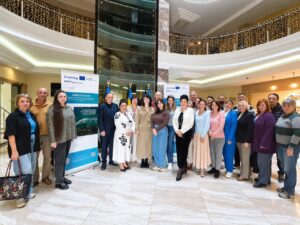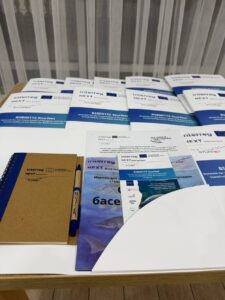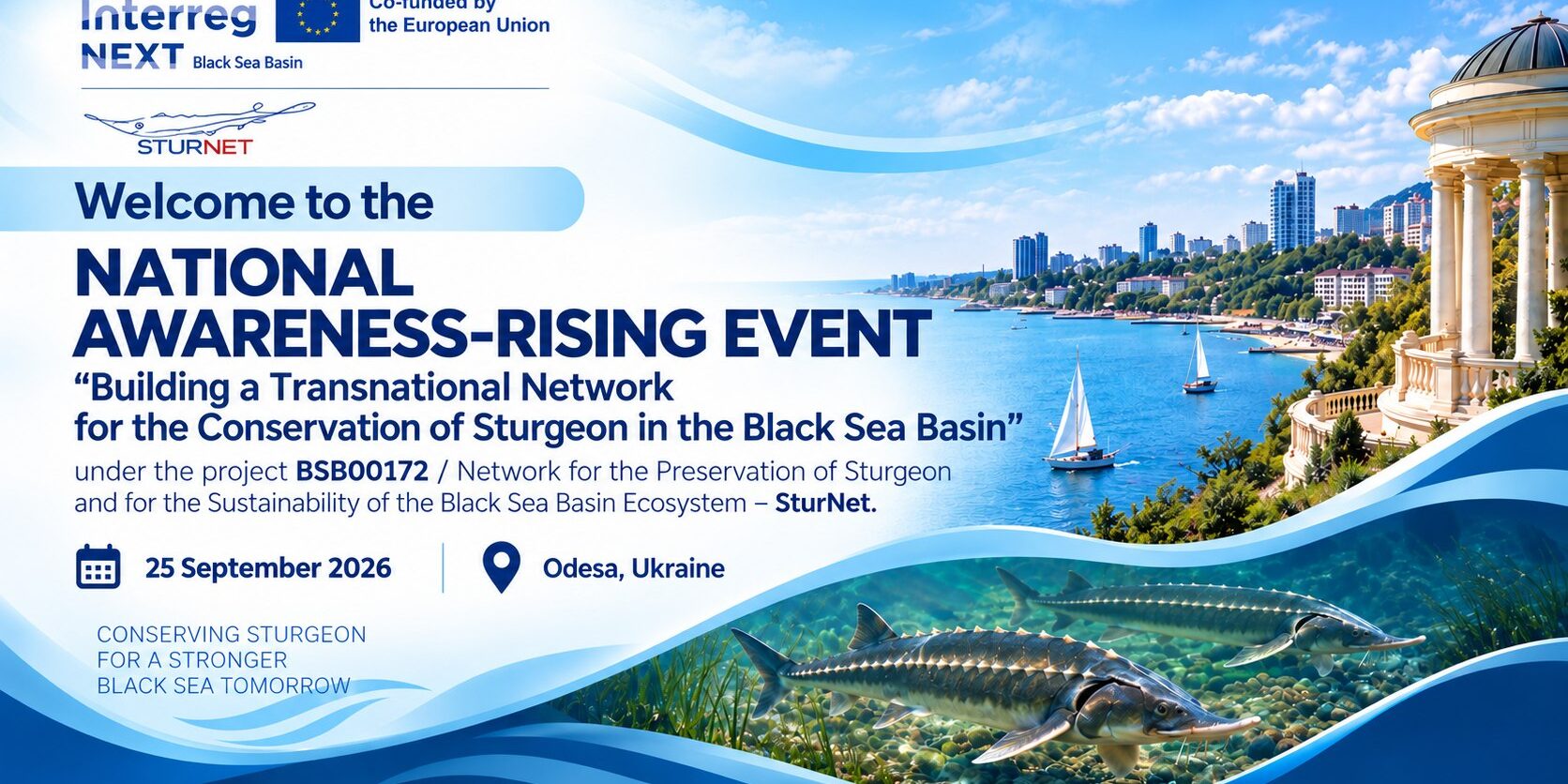
On 25 September 2026, the National Information Event “Building a Transnational Network for the Conservation of Sturgeon in the Black Sea Basin” was held in Odesa as part of the international project “Network for the Preservation of Sturgeon and for the Sustainability of the Black Sea Basin Ecosystem” (SturNet, BSB 00172).
The event brought together representatives of research institutions, public authorities, environmental organizations, protected areas, non-governmental organizations, educational institutions and other expert organizations interested in sturgeon conservation and the sustainable development of the Black Sea Basin ecosystem.
The event aimed to disseminate the project’s results at the local and national levels, support efforts to strengthen the protection of sturgeon species and the marine environment, exchange best practices, and identify synergies among relevant scientific, environmental and community initiatives.
The event opened with welcoming remarks by Borys Burkynskyi, Head of the Southern Scientific Centre of the National Academy of Sciences of Ukraine and the Ministry of Education and Science of Ukraine, Academician of the NAS of Ukraine; Nina Khumarova, Deputy Director for Research of the State Institution “Institute of Market and Economic & Ecological Research of the NAS of Ukraine” (IMEER), Corresponding Member of the NAS of Ukraine; and Iryna Shatokhina, Director of the Department of Ecology and Natural Resources of the Odesa Regional State Administration.
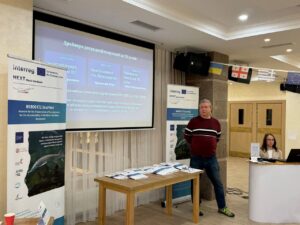
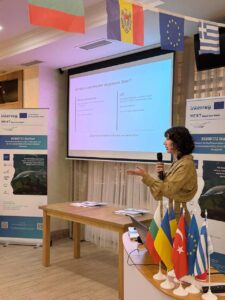
The programme included a presentation of the results and key areas of the SturNet project, including research on sturgeon habitats and the sustainable development of the Black Sea Basin ecosystem. The project was presented by Olha Karpenko, Senior Researcher at the Department of Economic Regulation of Natural Resource Use, and Olha Golikova, Academic Secretary of IMEER, PhD in Economics.
An important part of the event focused on scientific aspects of marine and river biodiversity conservation. Oleksandr Laiko, Deputy Director for Research of IMEER, Doctor of Economic Sciences, Professor, presented the RESPONSE project and its contribution to strengthening marine security. His presentation highlighted the importance of fostering synergies between complementary international projects and initiatives, creating opportunities for knowledge exchange, coordinated action and more effective cooperation in addressing shared environmental challenges in the Black Sea region. Participants discussed research into sturgeon habitats, important sturgeon sites in Ukraine and challenges related to their conservation, the experience of the State Scientific Institution “Institute of Fisheries, Marine Ecology and Oceanography” in conserving marine ecosystem biodiversity, as well as issues of marine security.
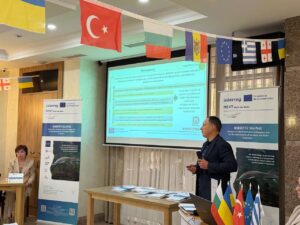
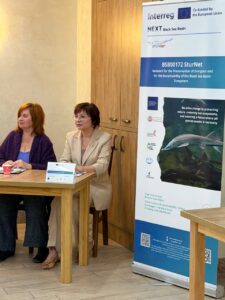
A separate session focused on modern tools for monitoring and managing coastal areas. In particular, participants presented the potential of geographic information systems (GIS), geoinformation technologies and satellite monitoring for the study and conservation of sturgeon species and for the management of Ukraine’s coastal areas. The practical dimension of environmental protection was presented by participants from government institutions, research organizations and civil society. The topics addressed included citizen science as a tool for collecting data on marine biodiversity, research into microplastics in the marine environment, legal mechanisms for implementing Ukraine’s National Action Plan for the Conservation of Sturgeon Species, the state of water resources, and local fishermen’s initiatives aimed at protecting coastal waters.
Particular attention was paid to bringing together scientific research, public environmental policy, conservation activities and community initiatives. Such cooperation is an important basis for developing an effective network of stakeholders working towards the conservation of sturgeon species and the sustainable development of the Black Sea ecosystem.
The event concluded with a discussion involving representatives of participating institutions and organizations, followed by the adoption of a concluding resolution of the National Information Event.
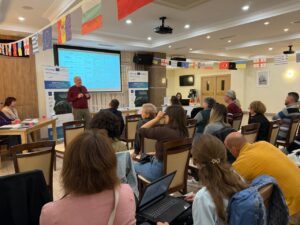
The event marked an important stage in disseminating the results of the international SturNet project and strengthening professional cooperation among the scientific community, public institutions, environmental organizations and civil society in the field of sturgeon conservation and sustainable development of the Black Sea Basin.
The event was held within the framework of the international project “Network for the Preservation of Sturgeon and for the Sustainability of the Black Sea Basin Ecosystem” SturNet (BSB 00172).